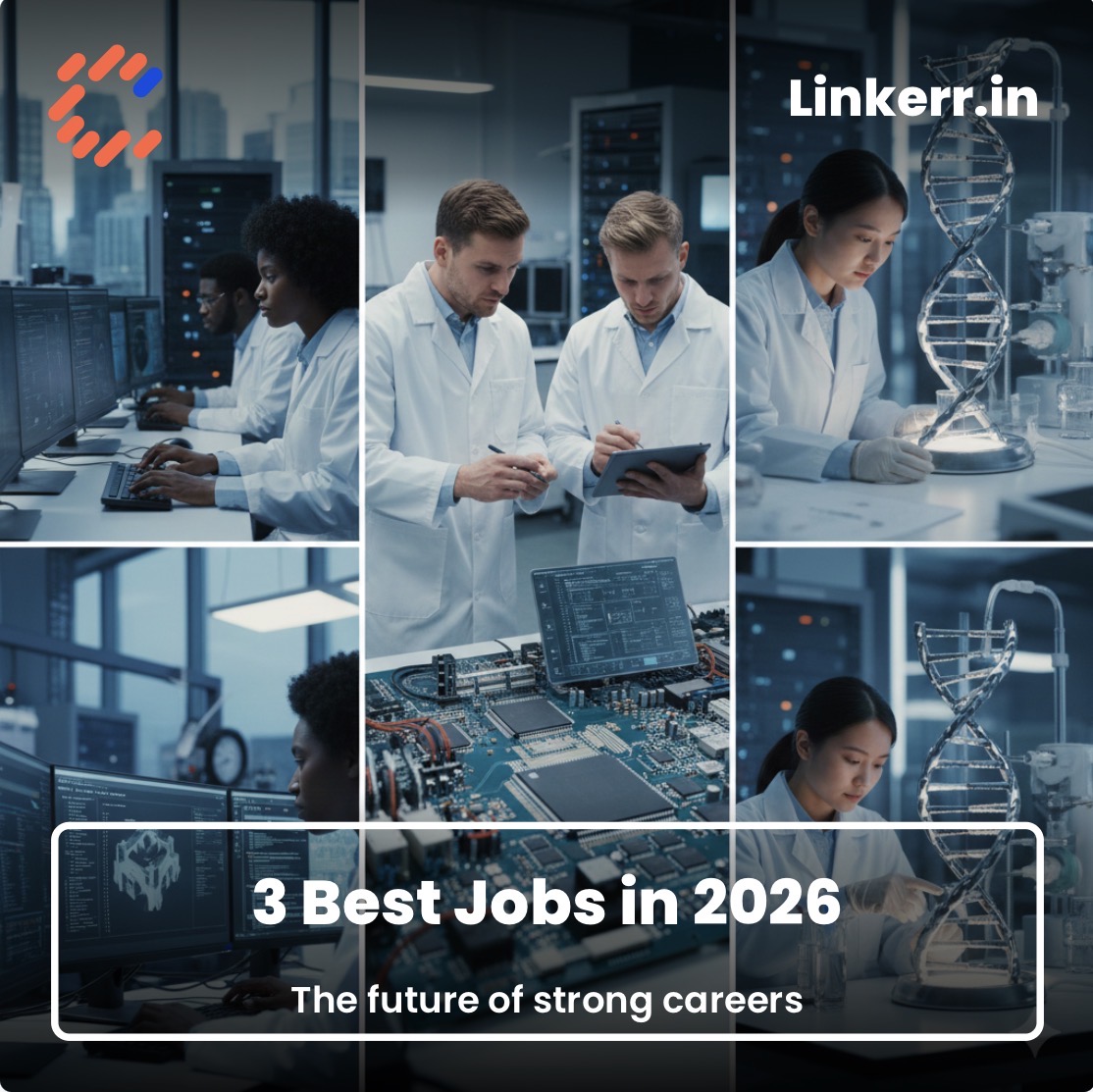
The Great Job Shift: Why "Generic" is Dead
The headlines are screaming about AI taking jobs, but they’re missing the real story. We aren't seeing the end of work; we are seeing the death of the average. In 2026, the economy has no room for "generalists."
As functional, industrial-grade AI takes over the "boring" heavy lifting, a massive vacuum has opened up for three specific types of experts. These are the people who build, power, and grow the future. If you aren't in one of these three lanes, it’s time to pivot.
1. The "Model Architects": Beyond Basic Coding
If you think coding is just about writing syntax, you're already behind. Generic web development is being automated by the very tools it created. The Next-Gen AI Coder doesn't just write lines of code; they architect intelligence.
These professionals focus on MLOps (Machine Learning Operations) and Deterministic Logic. They are the ones ensuring that when an AI controls a power grid, it doesn't "hallucinate" and cause a blackout.
- The Payoff: Demand for AI/ML Engineers has surged 117% in the last two years.
- The Skill: Moving from "generative" prompts to "functional" deployment.
2. The "Physical Riggers": Electrical & Electronics Masters
Software is useless without a body. We are entering the era of the IT/OT Convergence—where Information Technology meets Operational Technology. This has made Electrical and Electronics Engineers the most sought-after "physical" workers on the planet.
[attachment_0](attachment)
While code lives in the cloud, someone has to design the Edge Computing hardware and the high-precision sensors that allow AI to "feel" the real world. From solid-state batteries to autonomous robotics, if it has a pulse of electricity, it needs an elite engineer to keep it from failing.
"In 2026, the person who can fix a miscalibrated sensor with an oscilloscope is worth ten times the person who can only write a prompt."
3. The "Bio-Coders": Biotech Engineering's Golden Age
The most complex code on Earth isn't written in Python; it's written in DNA. Biotech Engineers are the new software developers of the organic world.
By using AI to map evolutionary patterns and predict protein folding, these engineers are doing in three days what used to take thirty years.
| Specialization | What They Actually Do | 2026 Outlook |
|---|---|---|
| Bioinformatics | Analyzing plant genomes for drought resistance. | Critical for Global Food Security. |
| Personalized Medicine | Tailoring cancer treatments to individual DNA. | Highest Salary Growth in Healthcare. |
| Biomanufacturing | Using yeast and bacteria to "grow" medicine. | Replacing traditional chemical plants. |
How to Stay Relevant
The "STEM dominance" narrative is shifting. It’s no longer about having a degree; it’s about having a Specialized Micro-Credential. Whether it's a certification in Agentic AI or Embedded Systems, the winners of 2026 are those who bridge the gap between digital logic and physical reality.
The revolution is here. It’s functional, it’s high-stakes, and it’s hiring.